4 Live On-line Sessions
Mondays February 19, February 26, March 4 & March 11, 2024
19:30 CET, 1:30 pm EDT
Duration: each session 90 min including Q&As
Price: USD 100
Can’t make this time? A video recording will be sent to all participants after the seminar.
Have you ever wondered about the fate of artworks and property seized by Nazis during the 20th century? Our four-part course traverses central Europe to reveal the bureaucratic efforts to repatriate stolen property post-WWII. Led by a historian of art, we will learn about several critical villas and palaces which were looted during the Third Reich. We will also study the administrative efforts which have been made to return items to their rightful owners.
Beginning from interwar Prague and Vienna, our expert will provide insights and historical context to remarkable art collections belonging to the region’s most prominent Jewish families. Stolen artifacts and art pieces were often sold during forced auctions and exported to Germany. Or they were placed into state-owned collections – destined for the Führer’s mega-museum in Linz, which never came to fruition.
Stolen goods were often used to furnish looted residential villas and offices throughout Europe. Post-war, the provenance became even more difficult to trace beyond Prague and Vienna–due to the early communist takeover in Czechoslovakia. Then, most of the former Jewish villas in Czechoslovakia were “nationalized” by the Bolsheviks.
Decades after the lifting of the iron curtain, the restitution of property and valuables remains a leading concern for historians, conservators, collectors, and families across the world. Participants in our course will come away with increased knowledge about the rampant property theft and destruction which occurred during the Third Reich. Additional details about each lecture in the course are provided below.
Lecture One: State-sanctioned Theft
Our course begins with an introduction to the mechanisms of Nazi bureaucratic looting, known as “valorization of property.” Prague’s synagogues were converted into warehouse stores, where Reich citizens could shop for possessions taken from Jewish families and sold well below their actual value.
Higher-value artworks which had been taken from wealthy Jewish families were forced into sale at selected auction houses–owned by high-ranking Nazi officials. Most valuable artworks were “donated” to state-owned museums in exchange for export permissions of the rest of collections.
Specific items were chosen for the planned Führer´s museum in Linz and hidden in salt mines where they were discovered by the allies at the time of liberation, alongside Czechoslovak monetary gold.
Our first lecture of the course will also discuss the Petscheks, the coal barons known as the “Bohemian Rotschilds“. We will explore their magnificent villas and palaces looted by the Gestapo and Wehrmacht and subsequently by the bolsheviks.
Lecture Two: Art Collections& Villas of Leading Industrialists in Bohemia& Moravia
Our second lecture will discuss the postwar restitution and ownership of essential art collections. Due to the lack of uniform approach and staffing in the administration of war reparation institutions, the restitution of the looted artwork has been, in some cases, made to the same people who robbed Jewish homes earlier. Many pieces have yet to be returned to their rightful owners.
We will start the conversation with an exciting case of Cornelius Gurlitt, an elderly man who hid for decades almost 2,000 artworks, including Picasso, Monet, or Dürer, in his small apartment in Munich. From there we will meet Richard Morawetz, who became one of the most hated men between Prague and Berlin, upon a successful boycott of important German income from yuta trade. The most valuable pieces from his art collection are now housed at the National Gallery in Prague.
The collection of modern art of the industrialist Jindrich Waldes was absolutely exceptional in the prewar context. It contained masterpieces by Frantisek Kupka, the pioneer of abstraction, including the iconic Cosmical Spring. Waldes exchanged his collection for his release from Buchenwald.
The city of Kolin, known as the “Jerusalem on the Elbe river,” prospered from the extensive sugar production. The sugar bosses Bauers, the Mandeliks, and the Benies hired the first-rate architects of their time to design magnificent modernist villas for them. Our exploration will lead us also to Moravia to explore the destinies, estates, and collections of the wealthy families of the Federers, the Zweigs, and the Tugendhats, to mention just a few.
Lecture Three: The Ephrussi Family’s Remarkable Art Collection
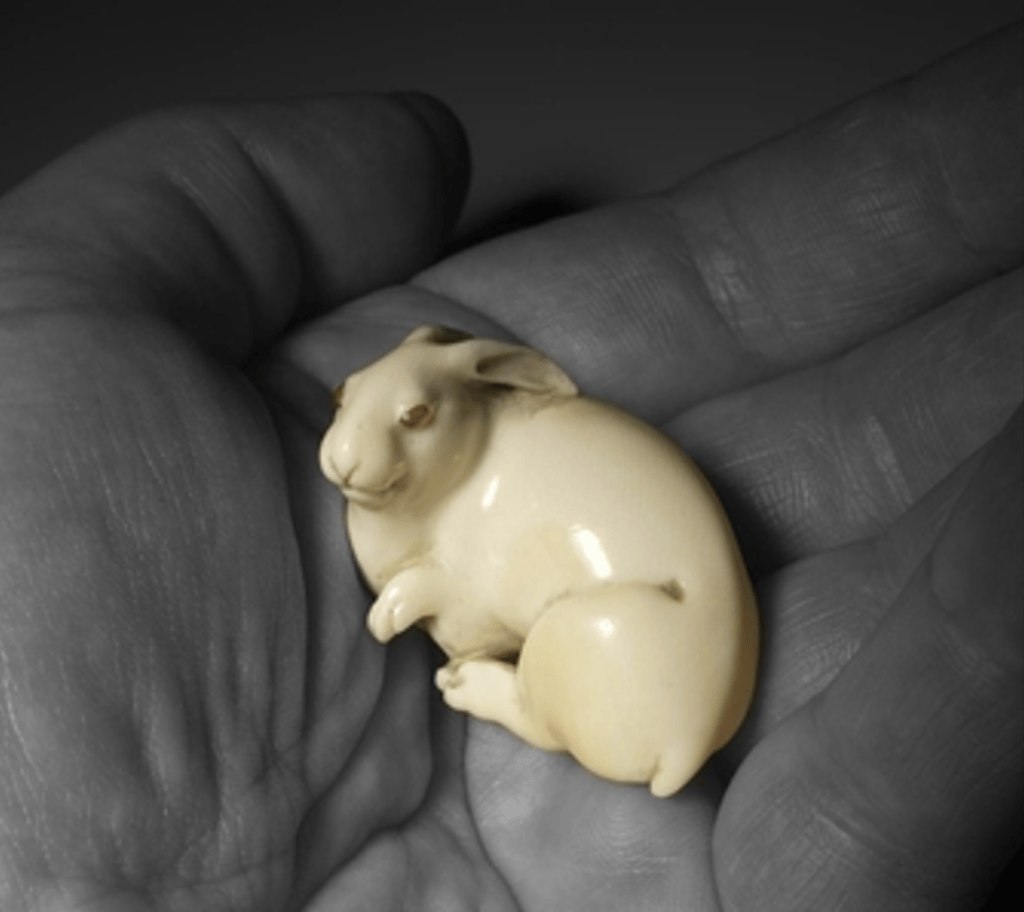
Our third encounter will take us to interwar Vienna to explore fascinating destinies of the Ephrussis, one of the most prominent Jewish families, known for their magnificent Palais at Schottentor and their extensive art collection. One of their most exquisite was a collection of Japanese netsuke immortalized by Edmund de Waal´s fascinating novel “The Hare with the Amber Eye.”
Originating in Odessa, a vibrant university city at the coast of the Black Sea, whose broad boulevards and intellectual cafés echoed Paris, the Ephrussi family emigrated to Paris and Vienna, where they were promoted to aristocratic status, among other things, for financing the construction of the Danube canal. Under a threat of deportation, they were forced to renounce their Austrian assets in 1938, and their fortune was ruthlessly seized or “Aryanized.”
Viktor Ephrussi and his wife were able to flee to Czechoslovakia, however, Emmy died a few months after the emigration. Their sons managed to escape to the United States, where they joined the US army. Their art collection ended up in the Art History Museum in Vienna and was partially sold to Germany.
They had to wait until the year 2019 to get some of their Aryanized assets back, in spite of the fact that the process of restitution started right after the war. Nevertheless, certain artworks from the Ephrussi collection are still unknown.
Lecture Four: Gustav Klimt’s The Woman in Gold
Klimt’s The Woman in Gold has become one of the most world-famous tales of restitution of looted property. After its subsequent sale, it became one of the most expensive paintings of all time.
The beauty immortalized by Gustav Klimt, Adele-Bloch Bauer, married a sugar baron from the proximity of Prague at the age of 18. The couple resided in Vienna, where Adele hosted a popular salon, attended by Gustav and Alma Mahler or Stephan Zweig. She inspired Klimt to paint her also as Judith, an iconic femme fatale.
One version of this painting ended up in the Czech Republic. Upon the creation of independent Czechoslovakia, the Bloch- Bauers adopted Czech citizenship and chose a Chateau at Panenske Brezany near Prague as their residence.
After Adele´s premature death and later annexation of Austria, Ferdinand managed to escape to Czechoslovakia and from here to Zürich, just like the Ephrussis. Their Prague Baroque chateau became the seat of Reinhard Heydrich, one of the best-known Nazi perpetrators, before his assassination.
 Praga Mirabilis | Podivuhodná Praha