Live On-line Session
Duration: 90 min
In the fourteenth century, Prague was the capital of the lands of the Bohemian Crown and one of the most prominent cities of medieval Europe. Chosen by Emperor Charles IV as the capital of the Holy Roman Empire, Church and State were inextricably linked in early Prague. This conversation will explore this connection through a close look at the sacred geometry used in architecture and city planning and by looking at the power of religious relics and their role in politics.
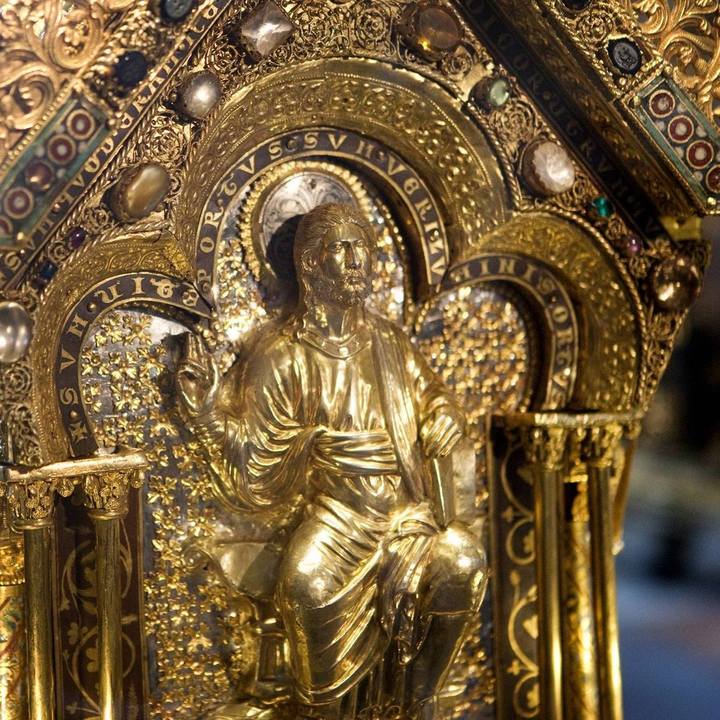
We’ll examine Christianity’s role in forming early modern states, including the conflict between Eastern and Western Christianity. We will explore the use of Christian art and architecture as an expression of political power and understand how religious relics, or body parts of saints and objects related to their lives, were used to seal political alliances. Then we will connect how the Christian Kabbalah, or magical organization of numbers, informed city planning, and urban design.
Led by an expert in the history of art and architecture, Dr. Katerina Prusova, participants will come away with an increased understanding of the thinking of medieval and early modern politicians and the role of Christianity in state-building. Learners will also gain insight into the meaning of Prague and Bohemia’s key monuments, such as Prague Castle, Karlstejn Castle, or Charles Bridge.
 Praga Mirabilis | Podivuhodná Praha